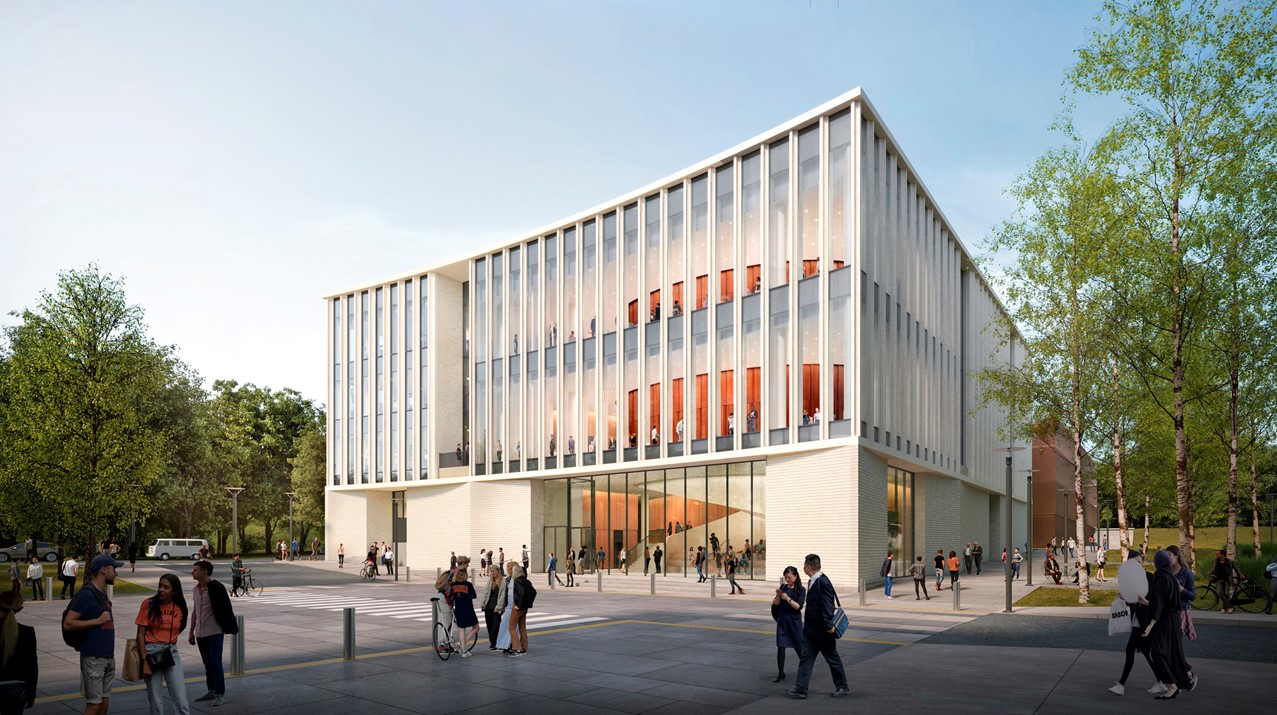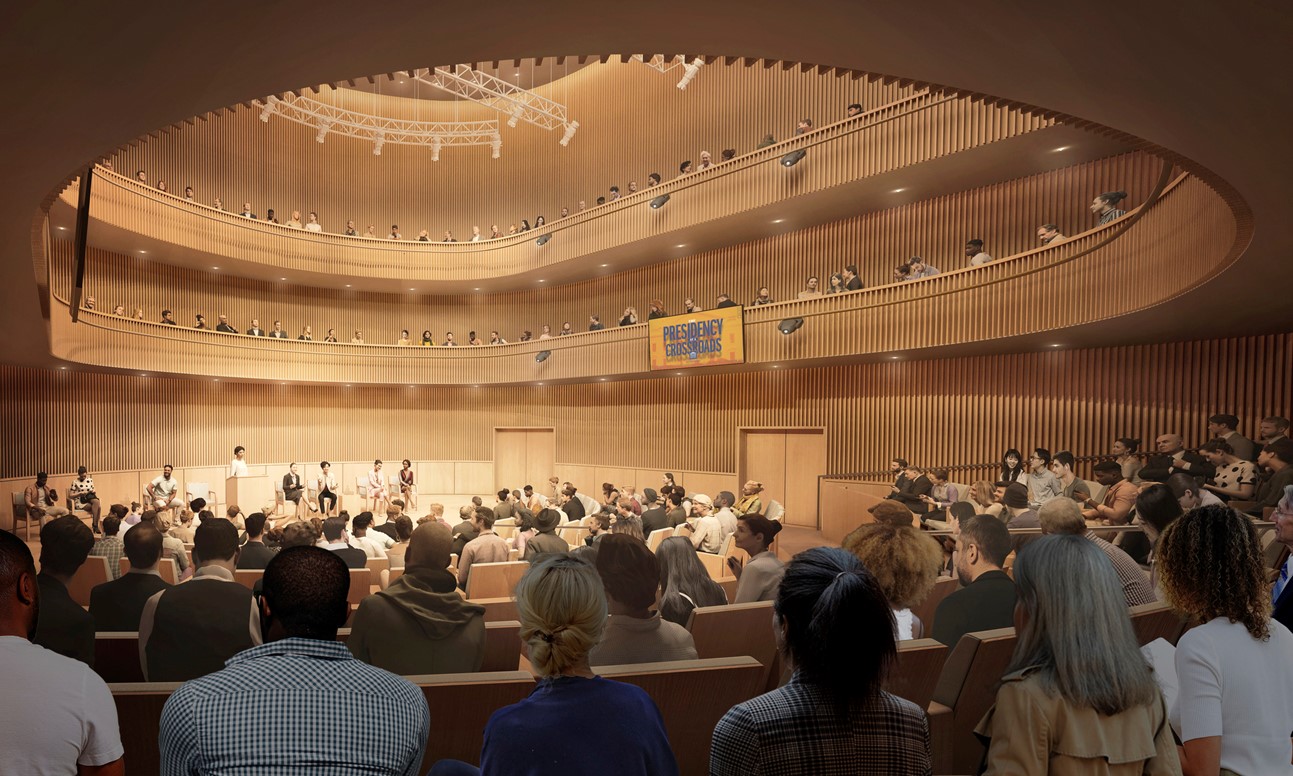

MEP/FP engineering for this learning and event facility supports classrooms, media production spaces, and a 440-seat auditorium with systems tailored to diverse occupancy and acoustic needs. The design includes dedicated outside air systems with energy recovery, displacement ventilation, low-energy lighting, water-conserving plumbing, and a digital controls system for zoned thermal management. Additional features such as acoustical treatment and siphonic roof drainage support performance, efficiency, and flexibility across the multipurpose space.
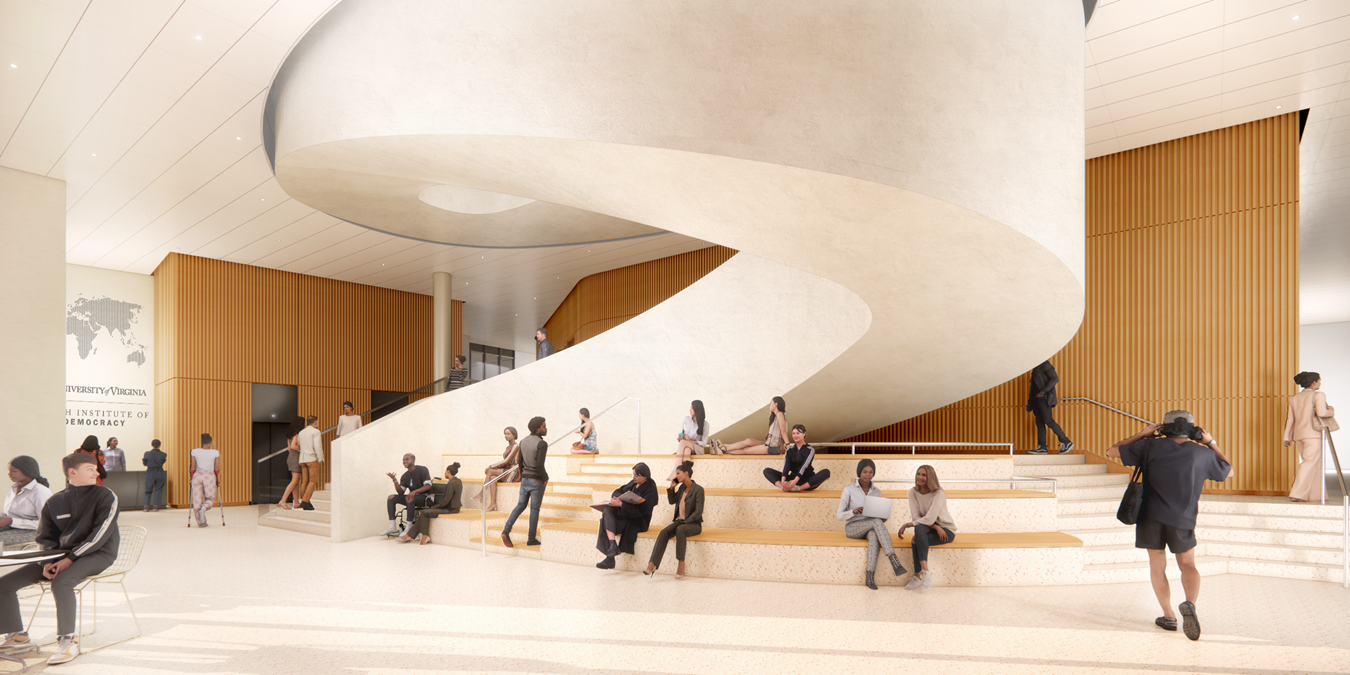
2RW is providing MEP/FP engineering for this multifaceted learning space designed for research and active learning and casual areas for studying, conversing, and contemplating. The facility will also incorporate spaces for gatherings and events, featuring a remote-ready 440-seat auditorium, conference rooms, and designated areas for receptions and catering. Media production areas, including a podcast studio, a place for making videos, broadcasting equipment, and other tech tools, will provide a platform for teachers and students to reach out beyond the university.
The design integrates dedicated outside air systems with energy recovery, a displacement ventilation system, low-energy lighting, and water-conserving plumbing fixtures to attain LEED Gold standards. The use of a displacement ventilation system not only aids in noise reduction and proves more efficient in high-ceiling spaces but also significantly improves indoor air quality by introducing fresh air from the floor level and pushing stale air upwards to be removed.
A sophisticated digital controls system ensures optimal thermal comfort and energy efficiency, with zoning covering classrooms, offices, conference rooms, the auditorium, the lobby, and pre-function areas. The facility’s multipurpose nature necessitates meticulous MEP design that includes acoustical and vibration treatment for all components to meet noise standards. Siphonic roof drainage features flat-designed pipes, eliminating the need for slope like traditional gravity systems. This design allows for smaller diameter pipes that are cost-effective and space-saving, contributing to the overall efficiency and adaptability of the space.
Hanbury
Höweler + Yoon Architecture
VHB
GHD
DumontJanks
Robert Silman Associates
Hourigan Construction
Axias
Shift Sustainability Consulting