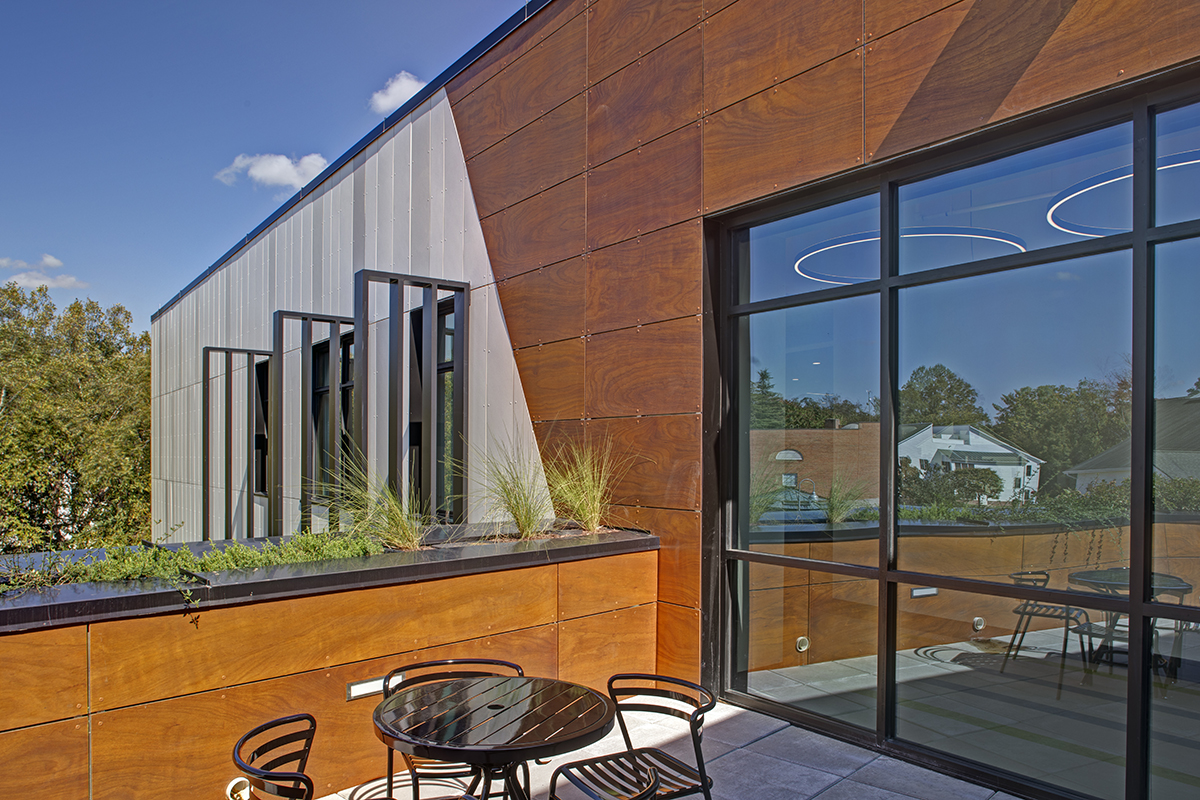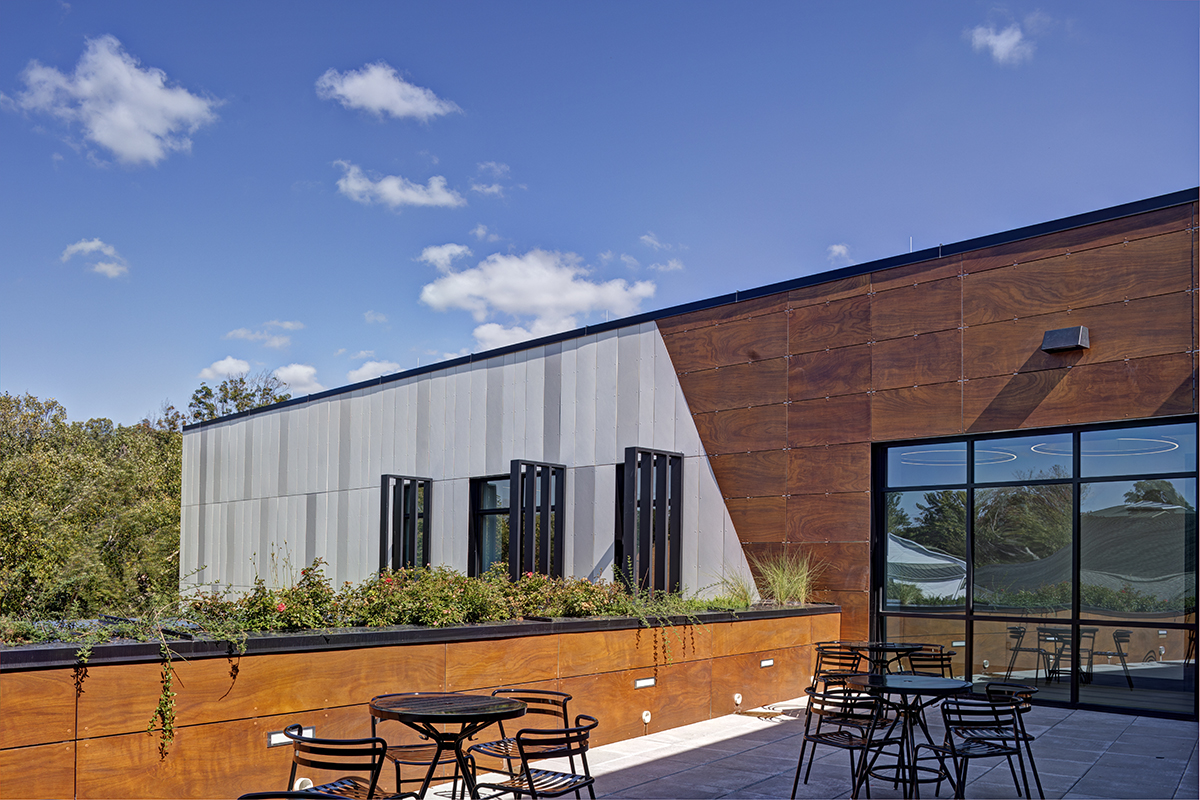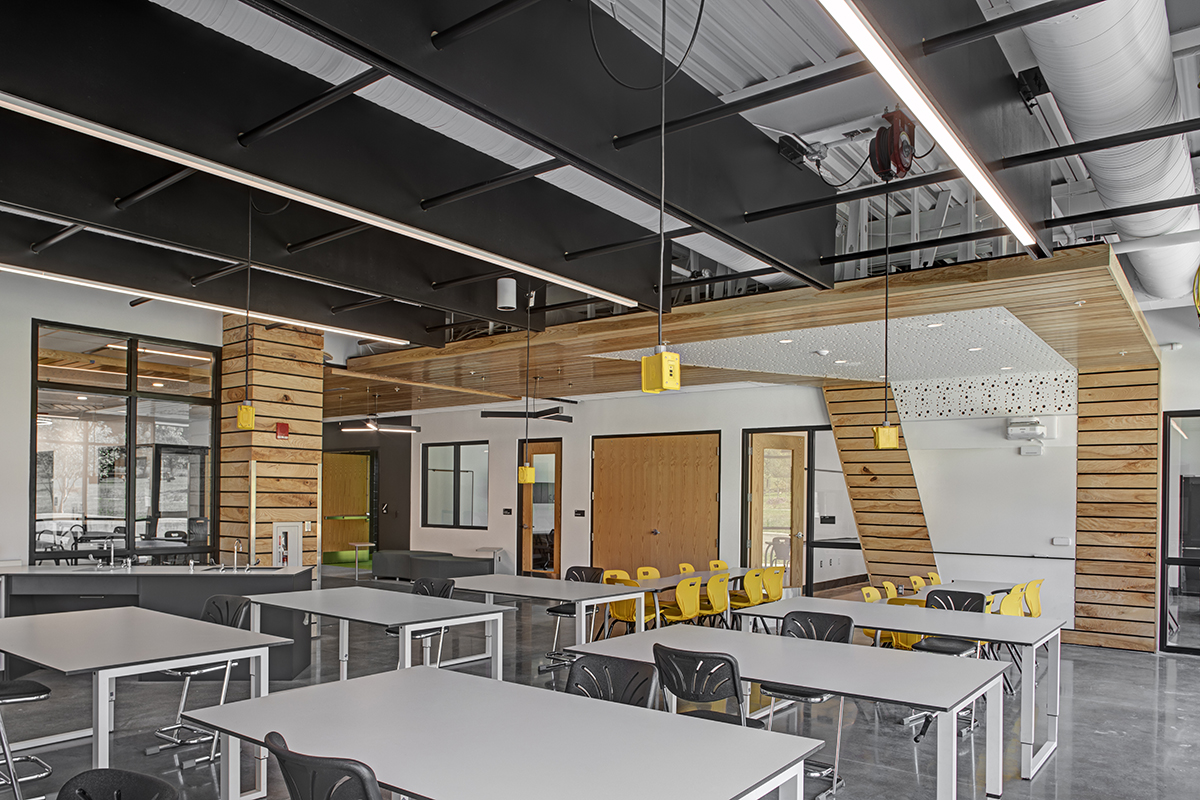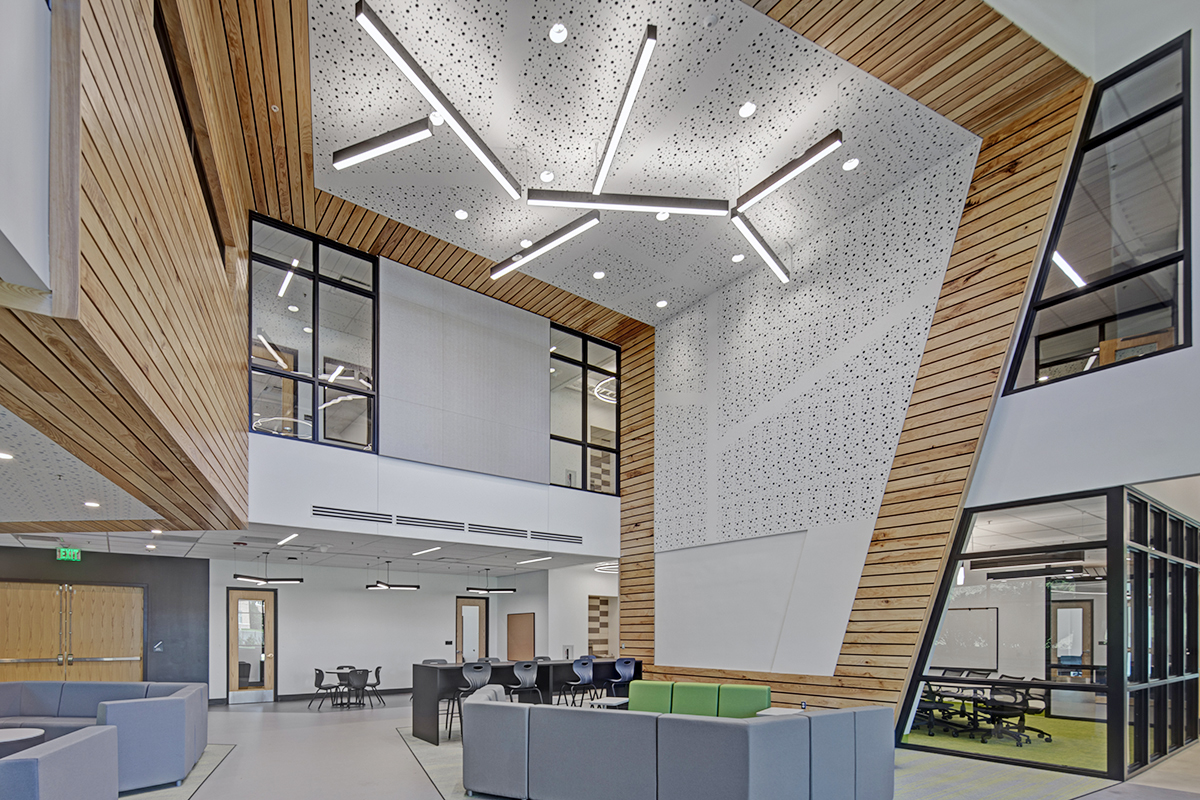

MEP/FP engineering for this upper school supports classrooms, maker spaces, collaboration areas, offices, and student commons with systems aligned to WELL and IgCC standards. The design includes a hybrid geothermal and VRV mechanical system with DOAS and energy recovery, natural ventilation strategies, LED lighting with digital controls, EV charging, and efficient plumbing systems.
The new Upper School includes classrooms, maker spaces, collaboration areas, faculty offices, an administration suite, and a student commons, all designed to support flexible, modern learning environments.
2RW provided MEP/FP engineering for high-performance building systems, including a hybrid mechanical system combining geothermal water-source heat pumps and variable refrigerant volume technology, supported by dedicated outdoor air systems with energy recovery. Natural ventilation strategies were implemented through operable windows and green-light sensors to indicate optimal conditions for passive ventilation. The electrical design included LED lighting with digital controls to maximize efficiency and electric vehicle charging stations. Plumbing systems incorporated energy-efficient instantaneous domestic water heaters. 2RW collaborated closely with the design team and stakeholders to define project goals and align building systems with WELL Building and the International Green Construction Code. Site visits were conducted to document existing conditions, including adjacent site elements, grading, and utility infrastructure that informed system design.
The Upper School is the first building in Montgomery County constructed in accordance with the International Green Construction Code, which adds green provisions beyond baseline code requirements to address local climate and regulatory priorities. The net-zero energy-ready design leverages the existing campus photovoltaic array and positions the facility for long-term energy performance. WELL Building strategies incorporated into the design include enhanced ventilation controls with monitoring, filtration, and distribution to improve system effectiveness, along with lighting controls that maximize natural daylight and maintain balanced luminance throughout the building. Together, these measures support energy efficiency, occupant wellness, and sustainable campus operations.
Stantec
Whiting-Turner
2022 – Association for Learning Environments, Learning by Design Grand Prize Award