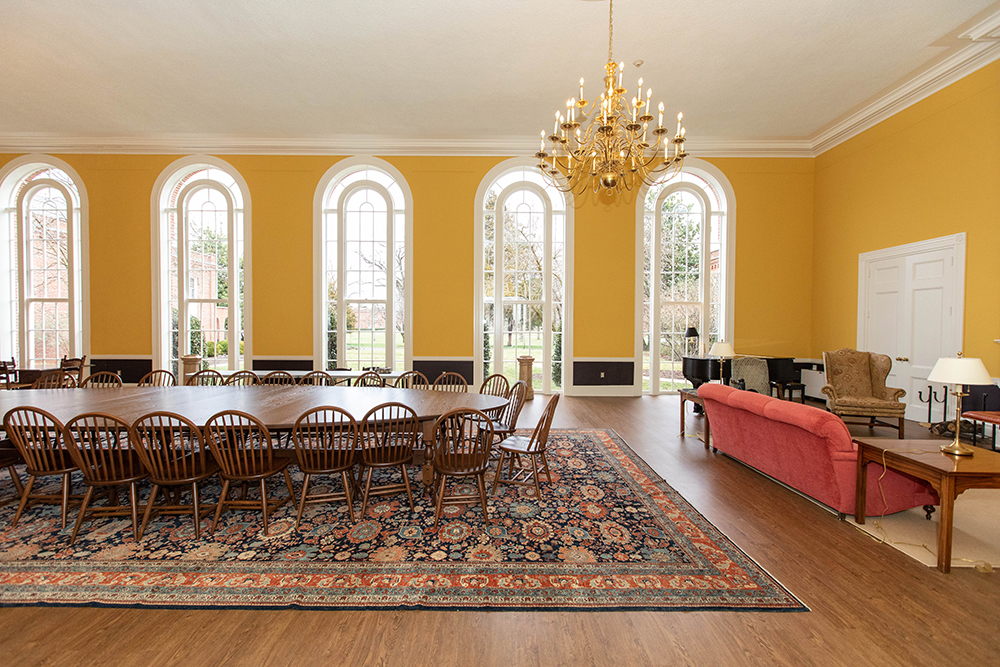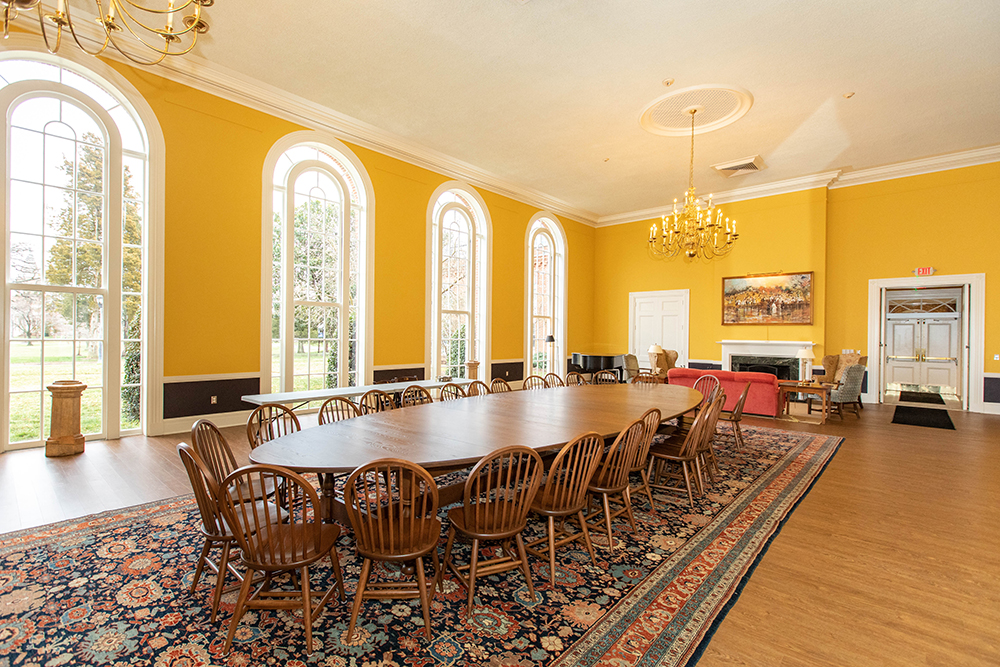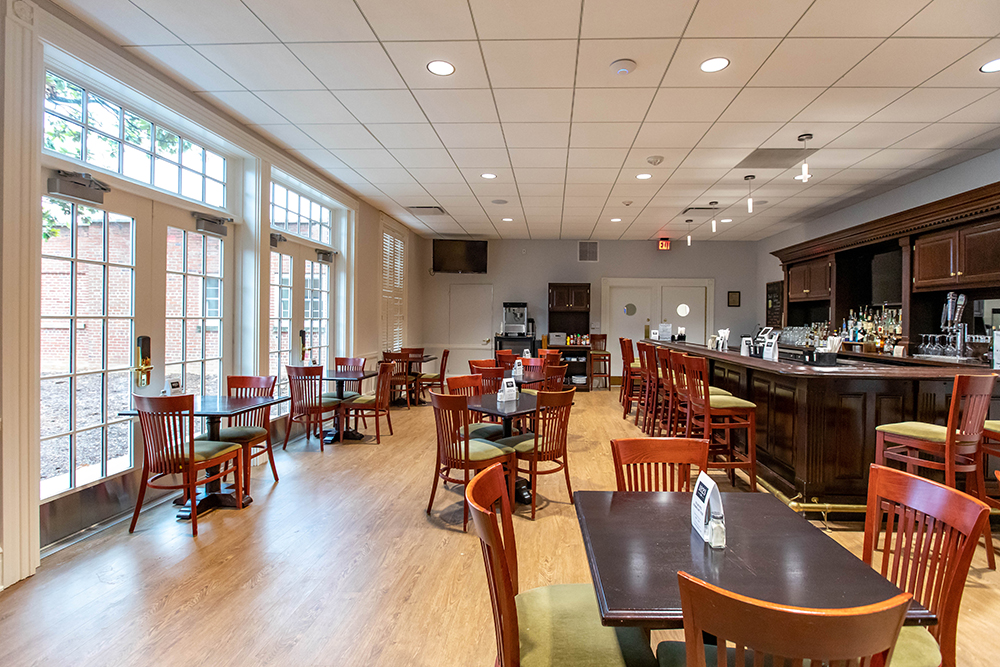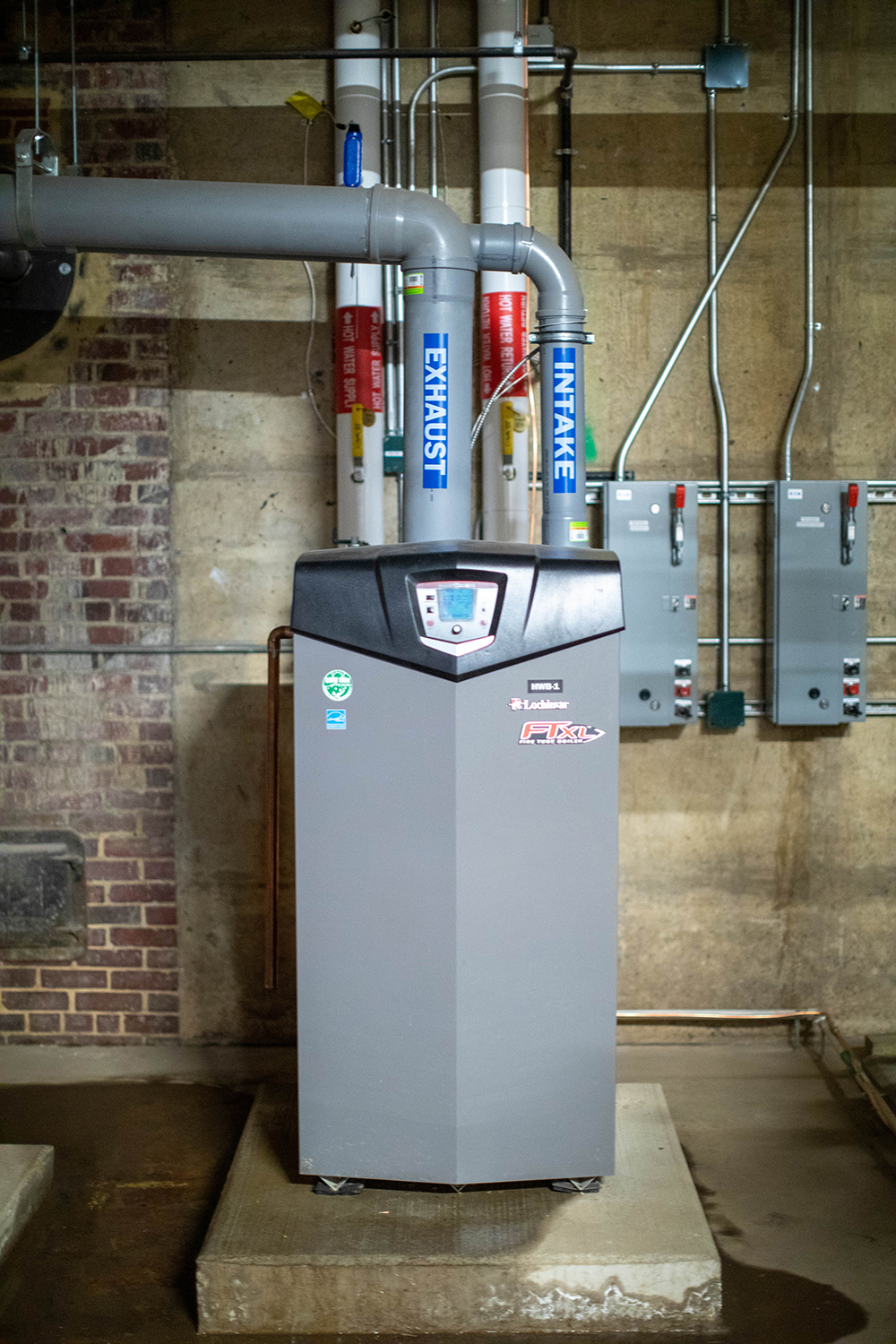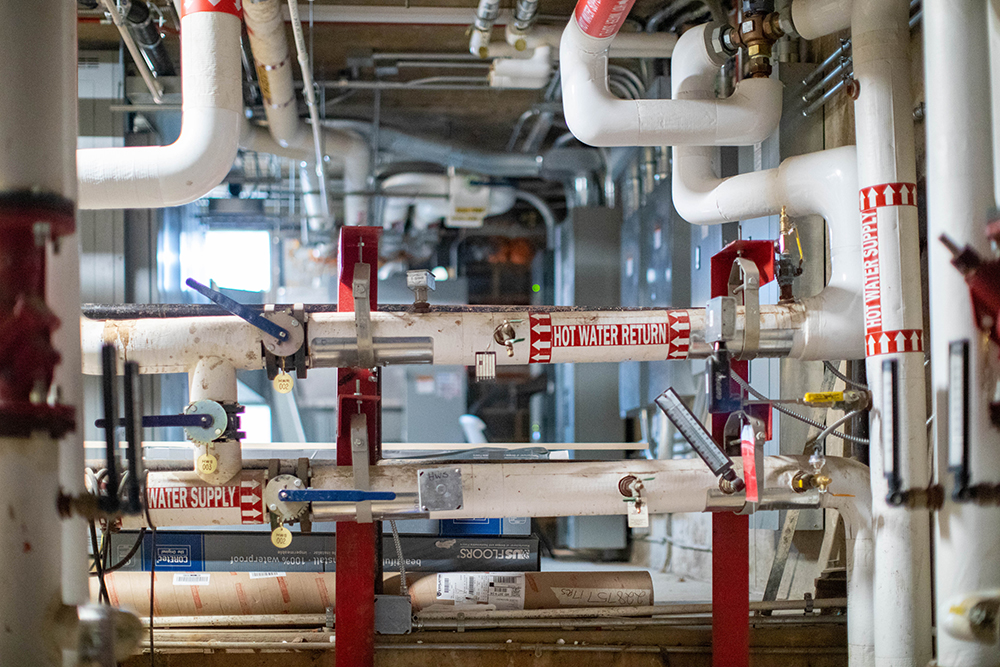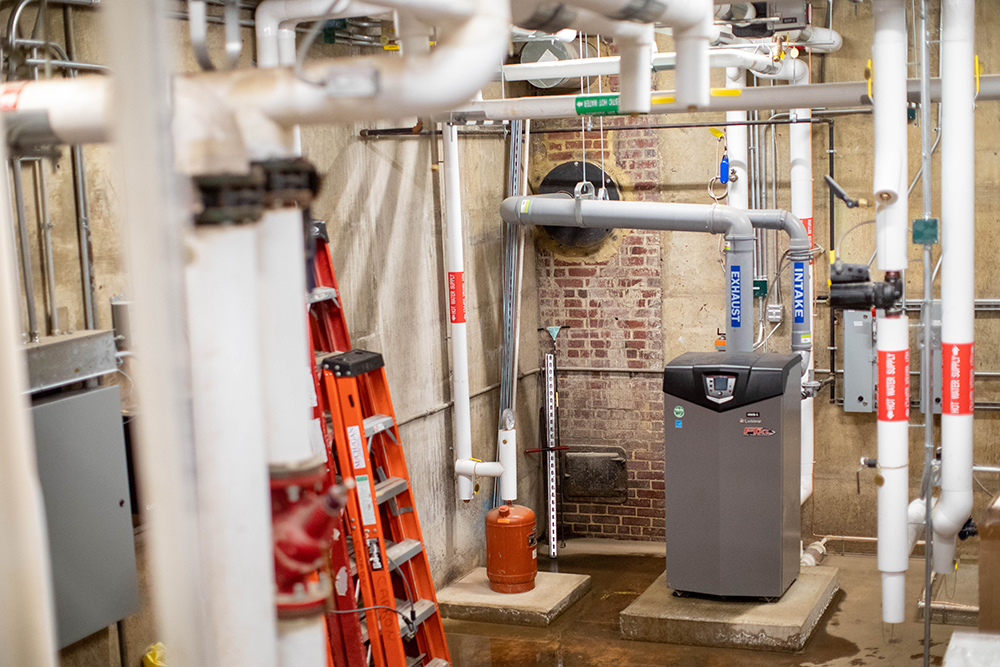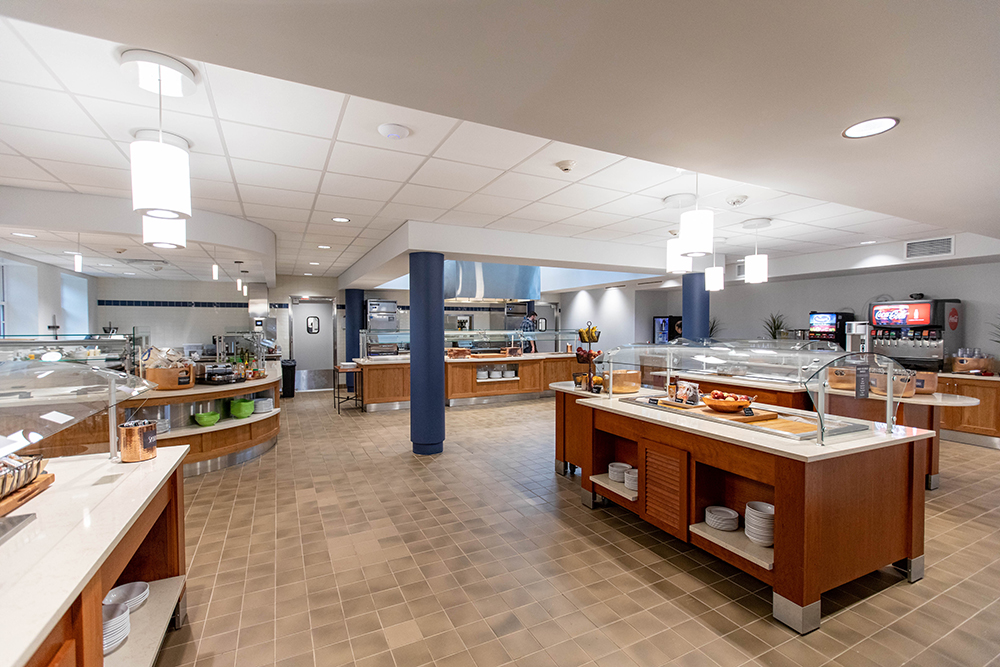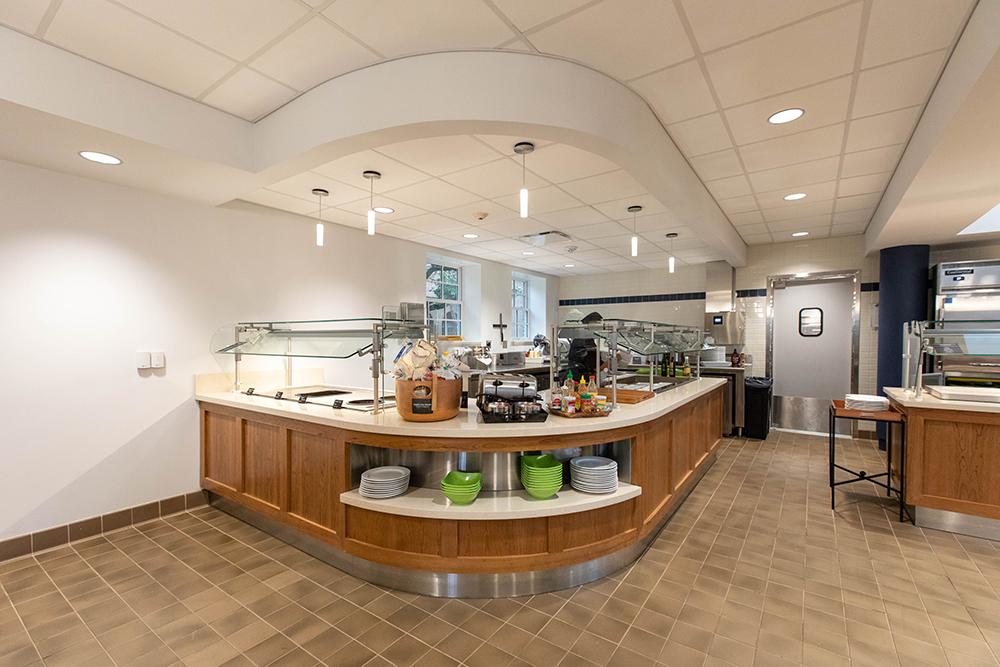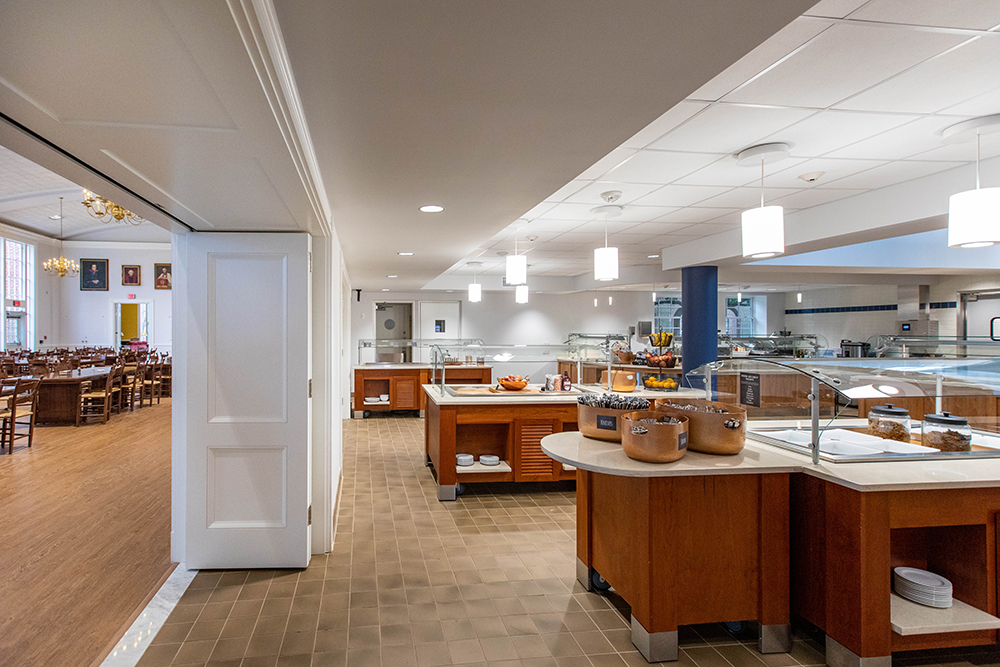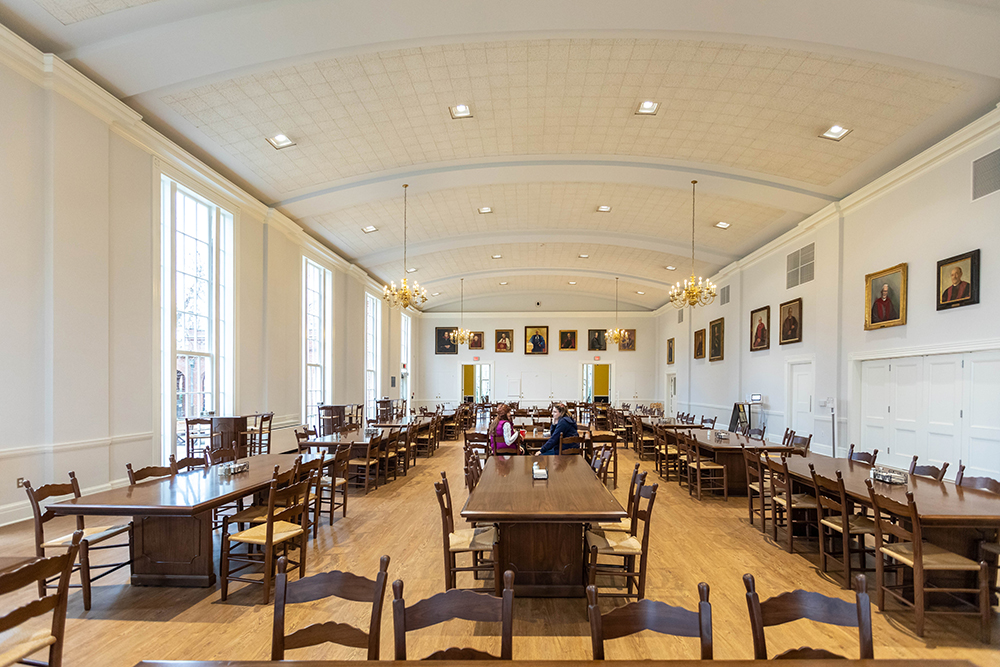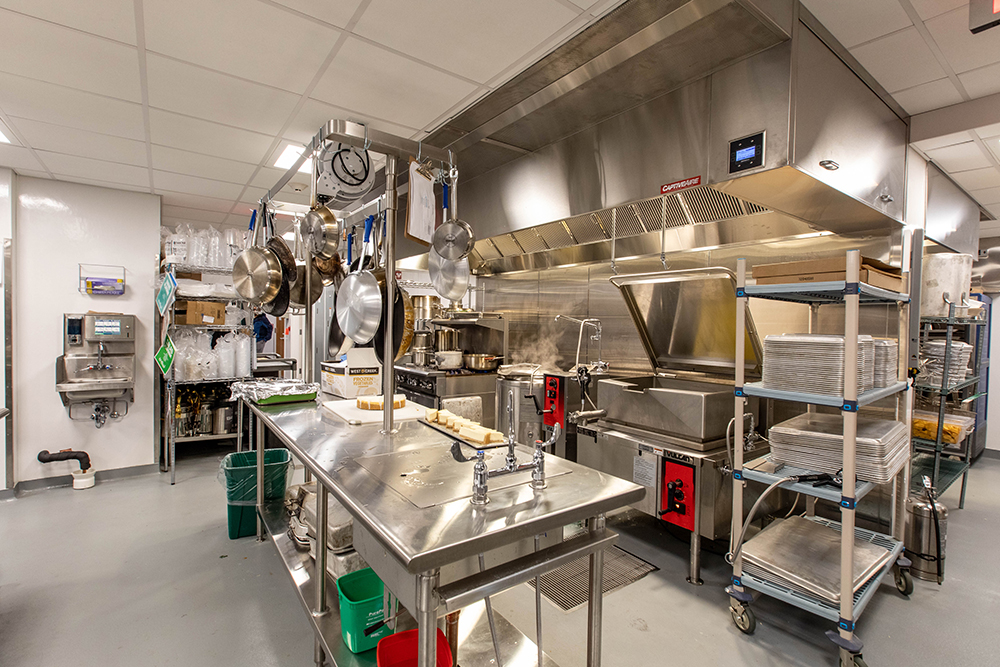

MEP/FP engineering for this dining renovation supports a commercial kitchen, refectory, and café spaces with systems connected to campus utilities and a supplemental condensing boiler for domestic hot water. The design includes BAS upgrades for load-based operation, SZVAV and demand-controlled ventilation strategies, and modernized lighting with centralized controls.
This major renovation modernized the refectory, upgraded to a commercial kitchen, and updated Café 1823 and Scott’s Lounge. 2RW provided MEP/FP design for connection to the campus central thermal plant utilities, supplemented by a high-efficiency, natural gas-fired condensing boiler for summer operation to support kitchen domestic hot water generation. The Building Automation System (BAS) was modernized to allow operation using either campus hot water or the standalone summer boiler based on load demand, improving flexibility and efficiency. The design also incorporates Single Zone Variable Air Volume (SZVAV) controls and Demand Control Ventilation (DCV) strategies to optimize ventilation and energy performance.
Lighting systems were fully modernized with centralized controls and web-enabled scene control presets to support a range of dining and gathering environments. Architecturally concealed fan coil units were specified to minimize visual impact and preserve the historic character of the Refectory and Scott’s Lounge. 2RW also coordinated closely with manufacturers and consultants to support the installation and utility infrastructure requirements of modern commercial kitchen equipment.
The renovation and modernization of the kitchen greatly enhanced the flow of students through the serveries and into the dining room. The updated kitchen allows a variety of dining options to support various campus functions while providing an inviting atmosphere for student and faculty engagement.
VMDO Architects
R.C. Fields & Associates, Inc.
Springpoint Structural LLC
Whiting-Turner