
MEP/FP engineering for the Frederick County Middle School supported a new, modern facility designed to serve a growing student population with flexible academic and community spaces. The design integrates mechanical, electrical, plumbing, and fire protection systems to support classrooms, collaborative environments, and shared-use areas, with a focus on ventilation, indoor comfort, and system reliability.
Systems were designed to provide a durable, energy-efficient solution that supports long-term operations, enhances occupant comfort, and aligns with the County’s goals for a high-performing, future-ready educational facility.
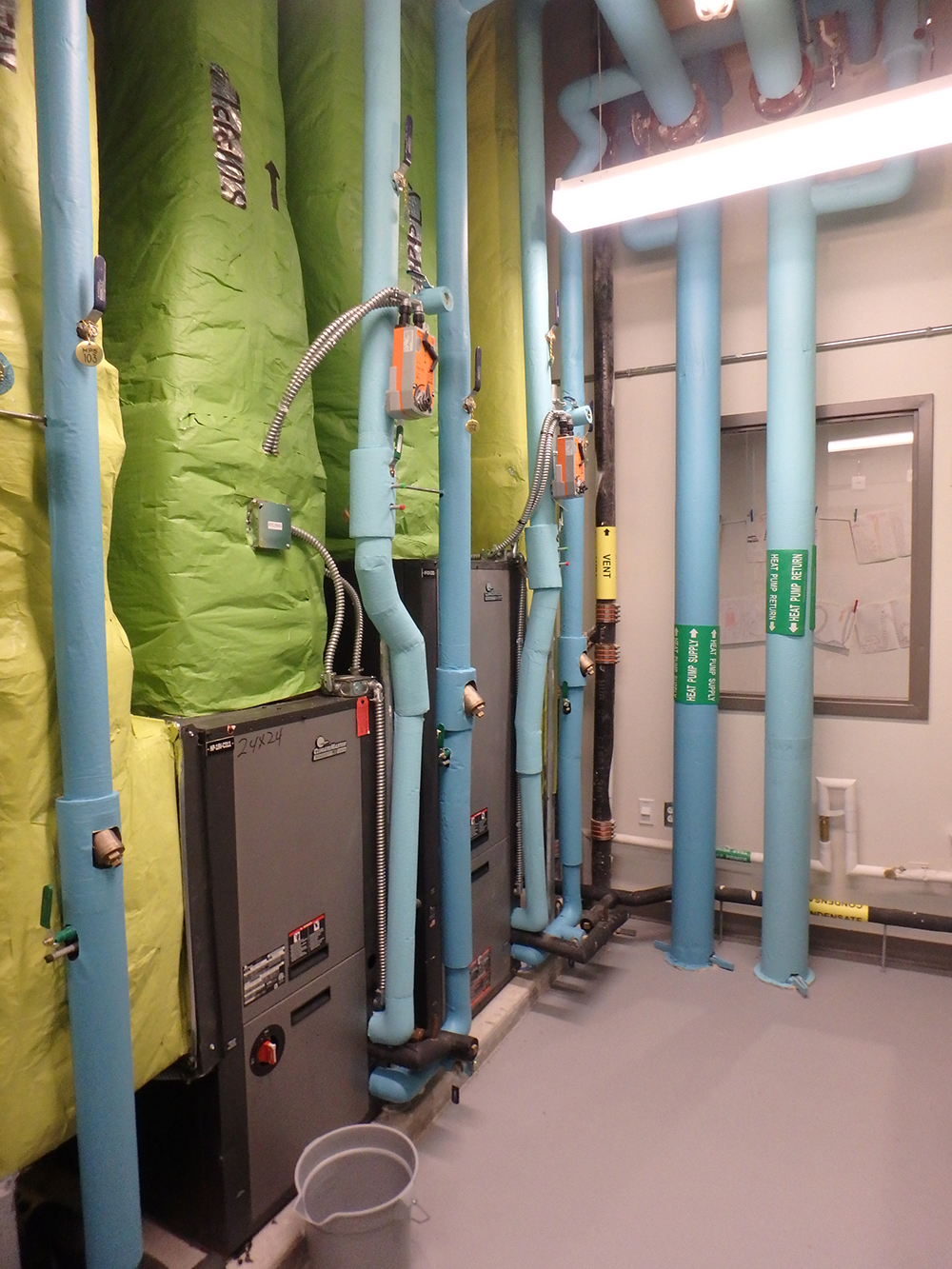
The project team utilized an integrated design process to improve cost and schedule efficiencies and produce an exceptionally energy-efficient building. 2RW performed energy modeling to enable data-driven comparisons of building shell and HVAC alternatives. The data facilitated design decisions that minimized heating and cooling loads and reduced HVAC system requirements. 2RW also helped evaluate and select energy-efficient envelope, HVAC, plumbing, and lighting solutions, including a hybrid geothermal HVAC system with an expected return on investment of fewer than 10 years.
The site’s rural location posed a challenge for water generation and treatment, as it was not served by municipal utilities. 2RW worked closely with the water treatment and management consultant to leverage an artesian well and an innovative on-site wastewater treatment system, enabling the school to source, treat, and relieve all water on-site and achieve Net Zero Water status.
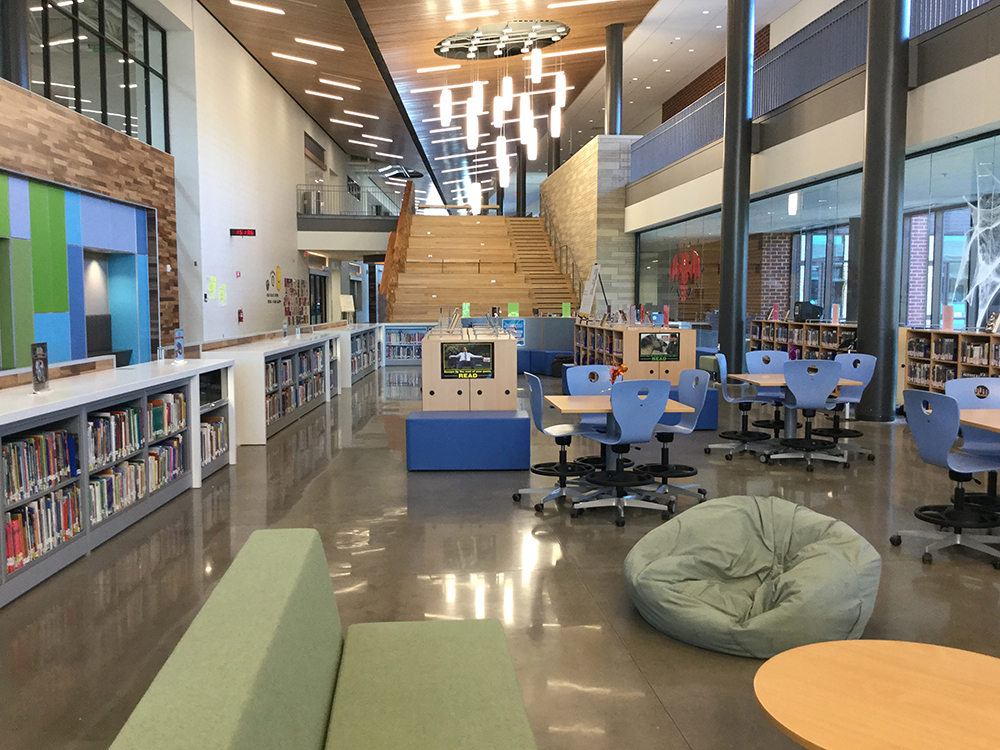
2RW designed the MEP/FP infrastructure for the school which includes learning and office spaces, cafeteria, kitchen, gym, locker rooms, auditorium, and library. The design maximizes natural and LED lighting, incorporates “green light” sensors that notify students of the best times to open windows for fresh air, and augments the curriculum with opportunities to view and study the geothermal system.
The school is performing at an energy use intensity (EUI) of 25.17 kBtu/sf/yr, and continuing to approach a net-zero-energy-ready benchmark of 24 kBtu/sf/yr. As a comparison, the national median EUI for a K-12 building is 58.2 kBtu/sf/yr.